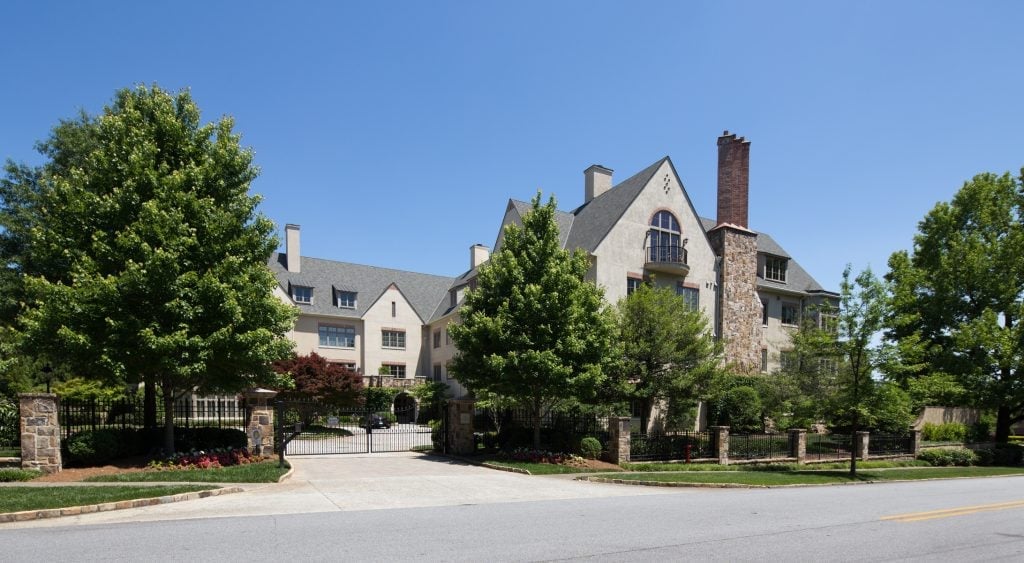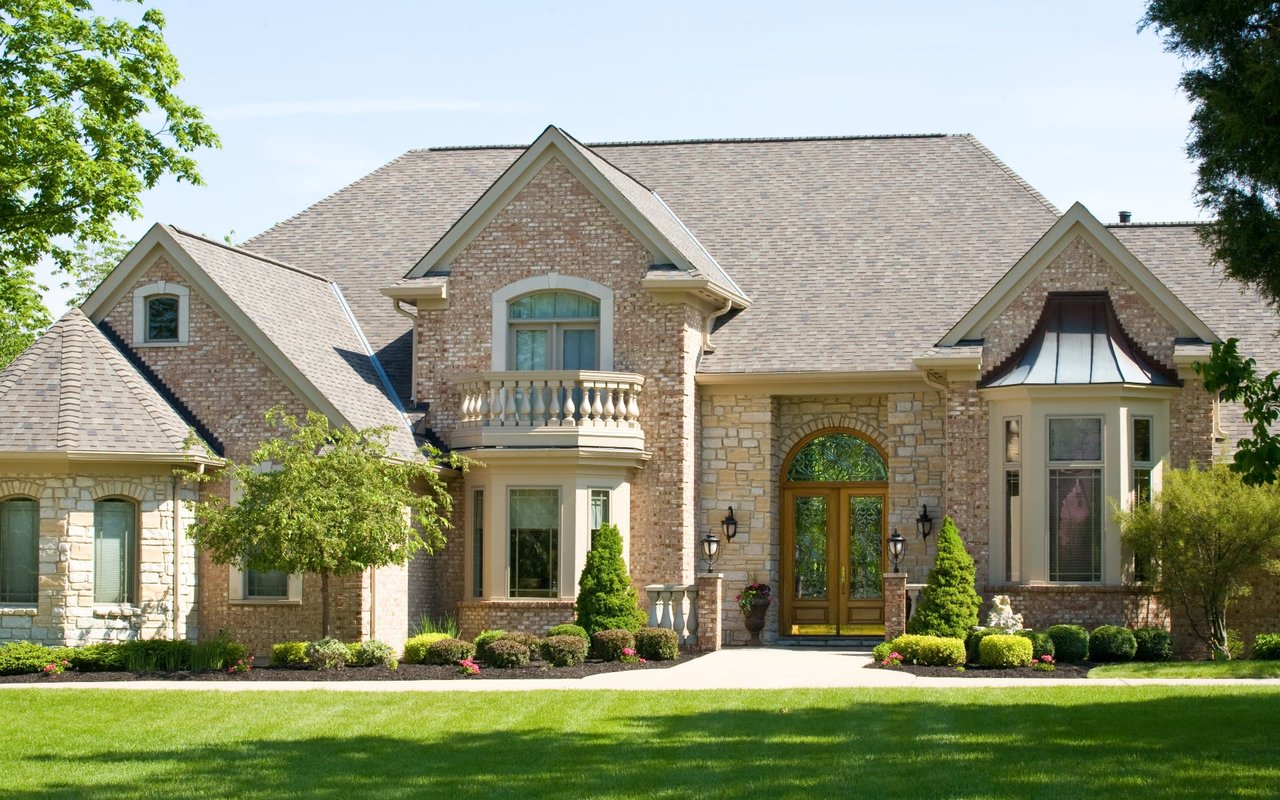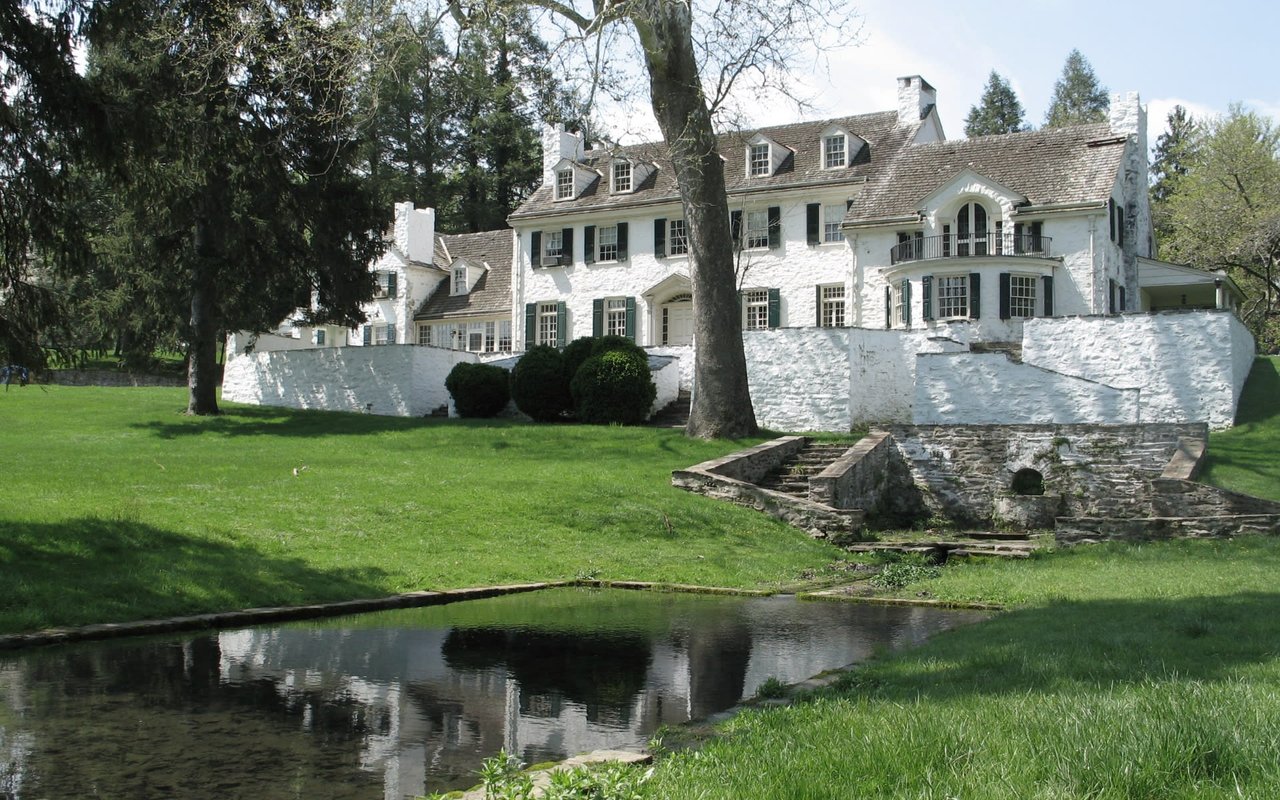
Pricing a typical home often begins with a relatively straightforward question: what have similar homes nearby sold for recently?
For a distinctive Buckhead estate, that question can become much harder to answer.
The property may sit on several acres while nearby sales have less than one. It may have been designed by a notable architect, extensively renovated over several decades, or built with materials and craftsmanship rarely found in newer homes. One property may have a pool, guest house, gated entrance, and exceptional privacy, while another with similar square footage has none of those features.
Even two estates on the same street can be very different assets.
That is what makes pricing the upper end of Buckhead's single-family market particularly nuanced.
The objective is not simply to calculate an average price per square foot. It is to determine how today's luxury buyer is likely to value the property's complete combination of location, land, architecture, condition, privacy, amenities, and scarcity.
Here is why that can be difficult and how sellers should approach the process.
Considering selling a Buckhead property? Explore Buckhead real estate, review recent sales, or contact The Agency Atlanta Intown for a property-specific market analysis.
Luxury Estates Are Less Standardized
The more standardized a property is, the easier it generally becomes to compare with other sales.
Imagine several newer townhomes in the same development. They may share similar:
- Square footage
- Floor plans
- Lot sizes
- Construction quality
- Finishes
- Amenities
If several have sold recently, those transactions can provide a relatively clear framework for pricing the next one.
Buckhead estates are often the opposite.
They can differ substantially in age, architectural style, acreage, renovation quality, topography, privacy, street position, and amenities.
As uniqueness increases, direct comparisons become more difficult.
There May Be No Truly Comparable Sale
One of the first challenges is simply finding a relevant comparable property.
A seller may own a 9,000-square-foot estate on a large private lot with a pool and guest house.
Recent nearby sales might include:
- A 6,500-square-foot renovated historic home
- A 10,000-square-foot newer residence on a smaller lot
- A 12,000-square-foot estate that needed substantial renovation
- A similarly sized home in a different Buckhead neighborhood
All may provide useful information.
None may be a direct substitute for the subject property.
Luxury pricing therefore often requires analyzing several imperfect comparables and understanding why each sold where it did.
Location Within Buckhead Matters
"Buckhead" covers a large collection of neighborhoods and residential environments.
A property in Tuxedo Park is not automatically comparable with one in Garden Hills simply because both have Atlanta addresses and fall within the broader Buckhead market.
Buyers may assign different value to locations based on factors including:
- Street
- Lot size
- Privacy
- Neighborhood character
- Proximity to commercial areas
- Traffic
- Topography
- Surrounding properties
At the estate level, micro-location can matter considerably.
The Street Itself Can Affect Value
Even within the same neighborhood, not every street commands the same buyer response.
A quiet interior street lined with substantial estates may be perceived differently from a property located on a heavily traveled road.
A home positioned well back from the street behind mature landscaping may provide a different experience from one with greater road exposure.
That means neighborhood averages can obscure important differences.
Related reading: The Most Prestigious Streets in Buckhead
Land Can Be as Important as the House
For many Buckhead estates, the lot is a major component of value.
Buyers may evaluate:
- Total acreage
- Usable yard
- Topography
- Privacy
- Mature landscaping
- Tree canopy
- Setback from the street
- Outdoor entertaining areas
- Development potential
Two properties may both sit on two acres but offer completely different experiences.
One may provide broad, usable lawn and exceptional privacy.
Another may include steep terrain, drainage limitations, or less functional outdoor space.
Acreage alone does not tell the entire story.
Usable Land Matters More Than the Number on the Tax Record
Luxury buyers are often evaluating what the land allows them to do.
Can they add a pool?
Is there space for a guest house?
Does the backyard support entertaining?
Can children or pets use the lawn comfortably?
Is the property private?
Does the topography create attractive views or make the site difficult to use?
The answers can create meaningful differences between lots of similar acreage.
Privacy Can Carry a Premium
Privacy is difficult to quantify because it does not appear as a simple line item in a property record.
Yet it can be one of the defining features of a Buckhead estate.
Privacy may come from:
- A deep setback
- Gated entry
- Large acreage
- Mature trees
- Landscaping
- Property orientation
- Limited visibility from neighboring homes
A highly private estate can create an experience that is difficult to replicate, particularly while remaining close to central Atlanta.
That scarcity can influence buyer perception.
Architecture Can Be an Asset or a Limitation
Buckhead includes an unusually broad range of residential architecture.
Depending on the neighborhood, buyers may encounter:
- Georgian residences
- Tudor Revival homes
- Colonial Revival architecture
- Traditional European-inspired estates
- Mid-century modern homes
- Contemporary residences
- New custom construction
A distinctive architectural property may attract buyers willing to pay for its character and scarcity.
But highly specific architecture can also narrow the buyer pool.
A design one buyer considers extraordinary may simply not fit another buyer's taste.
Architectural Pedigree Can Be Difficult to Quantify
A residence designed by a recognized architect or associated with an important period of Atlanta architecture may have value beyond its physical square footage.
But there is rarely a simple formula for assigning a dollar amount to architectural significance.
The market response depends on whether the right buyers recognize and value that significance.
This is one reason marketing matters particularly at the luxury level. Buyers need to understand what makes the property exceptional.
Renovation Quality Varies Dramatically
"Renovated" is not a standardized condition.
One estate may have received cosmetic updates.
Another may have undergone a comprehensive renovation involving:
- Electrical systems
- Plumbing
- HVAC
- Roof
- Windows
- Kitchen
- Bathrooms
- Flooring
- Lighting
- Outdoor spaces
- Smart-home systems
Two homes described as renovated can therefore represent very different levels of investment.
Cost Does Not Automatically Equal Market Value
A seller may have invested substantially in a renovation, but buyers do not necessarily reimburse renovation costs dollar for dollar.
The market evaluates the result.
Buyers may ask:
- Are the finishes appropriate for the price point?
- Is the design current?
- Is the craftsmanship strong?
- Does the renovation respect the architecture?
- Are the improvements broadly appealing?
A highly personalized renovation may have cost more than a restrained one while appealing to fewer buyers.
Original Condition Creates Another Pricing Challenge
Some Buckhead estates have exceptional architecture, land, and location but interiors that have not been substantially updated in decades.
These properties can be particularly difficult to price.
The seller may see craftsmanship, history, and irreplaceable details.
The buyer may simultaneously see:
- A major kitchen renovation
- Multiple bathrooms to update
- Older mechanical systems
- Electrical work
- Window replacement
- Flooring restoration
- Extensive decorating
The challenge is determining how much value buyers will assign to the underlying property after accounting for the work they believe is necessary.
Luxury Buyers May Discount Renovation Risk
The expected cost of renovation is only part of the equation.
Buyers may also consider:
- Time
- Permitting
- Architectural work
- Contractor availability
- Construction uncertainty
- Unexpected conditions
- The inconvenience of managing a major project
As a result, the market discount for an estate needing significant work may exceed a simple contractor estimate.
New Construction Creates Its Own Comparison Problems
A newly built Buckhead estate may seem easier to price because the home is current.
But construction quality varies considerably.
Buyers may compare:
- Builder reputation
- Architect
- Materials
- Interior design
- Ceiling heights
- Windows and doors
- Kitchen quality
- Millwork
- Landscaping
- Outdoor living
Square footage alone cannot capture those differences.
Price Per Square Foot Has Significant Limitations
Price per square foot can be useful as one reference point, but it is particularly easy to misuse when pricing luxury estates.
Consider two 8,000-square-foot homes.
One sits on an exceptional two-acre private lot, has been comprehensively renovated, and includes a pool and guest house.
The other sits on a smaller lot, needs updating, and lacks comparable outdoor amenities.
Applying the same price per square foot to both would ignore much of what buyers are actually purchasing.
Square Footage Itself May Require Investigation
Large older homes may have been expanded over time.
Different records may report different square-footage figures, particularly when properties include:
- Finished basements
- Guest houses
- Carriage houses
- Later additions
- Enclosed porches
Before relying heavily on a price-per-square-foot calculation, sellers should understand exactly what area is being counted and whether the comparable properties were measured similarly.
Guest Houses Can Add Meaningful Utility
A detached guest house, carriage house, or secondary living space can distinguish an estate.
It may function as:
- Guest accommodations
- Home office
- Fitness space
- Studio
- Private space for extended household needs
But again, there is no universal formula for its value.
The quality, size, condition, permitted use, and integration with the main property all matter.
Pools Are Not Equal Either
A pool can be a desirable feature in Buckhead's luxury market, but simply checking a "pool" box does not capture the complete amenity.
Buyers may evaluate:
- Pool design
- Condition
- Surrounding hardscape
- Privacy
- Landscaping
- Outdoor kitchen
- Covered entertaining space
- Pool house
- Relationship to the main residence
A well-designed outdoor environment can contribute more to the overall experience than the pool alone.
Outdoor Living Has Become Part of the Luxury Package
Luxury buyers may evaluate the entire property as an indoor-outdoor living environment.
Features can include:
- Covered terraces
- Outdoor fireplaces
- Outdoor kitchens
- Pool houses
- Formal gardens
- Sport courts
- Large lawns
- Multiple entertaining areas
These features are difficult to capture through basic comparable-sale adjustments.
The Garage Can Matter More Than Sellers Expect
At higher price points, buyers may expect more than a basic two-car garage.
They may value:
- Three or more garage spaces
- Covered guest parking
- Motor courts
- EV charging
- Additional vehicle storage
- Easy driveway circulation
An estate with exceptional interiors but inadequate parking may face a different buyer response from a similarly priced property with a more complete setup.
Functional Floor Plans Matter
Large square footage does not automatically mean a home lives well.
Luxury buyers may expect spaces such as:
- Generous primary suite
- Multiple ensuite bedrooms
- Home office
- Formal and informal entertaining areas
- Large kitchen
- Scullery or secondary kitchen
- Mudroom
- Fitness room
- Flexible guest space
An older estate may have impressive square footage but a layout designed for a different era.
The cost and feasibility of reconfiguring that space can influence buyer perception.
Ceiling Height and Natural Light Can Influence Buyer Response
Some property characteristics are difficult to appreciate in spreadsheets.
Ceiling height, window placement, natural light, room proportions, and the relationship between interior and exterior spaces can significantly affect how a luxury home feels.
These characteristics may help explain why two seemingly similar properties receive very different reactions from buyers.
Condition Is More Than Interior Design
A beautiful kitchen does not tell you the condition of a large estate.
Buyers may investigate:
- Roof
- HVAC systems
- Plumbing
- Electrical systems
- Windows
- Drainage
- Foundation
- Retaining walls
- Pool equipment
- Irrigation
- Exterior materials
On a large property, replacing or repairing major systems can represent a substantial expense.
Deferred maintenance can therefore influence pricing even when the home presents beautifully.
The Buyer Pool Is Smaller
As price increases, the number of potential buyers generally becomes smaller.
That has an important effect on pricing.
A more moderately priced home may have dozens of potential buyers searching within a particular neighborhood.
A multimillion-dollar estate may have a much narrower pool at any given moment.
The property may therefore require more time to find the buyer whose budget, timing, tastes, and lifestyle align with what the estate offers.
A Unique Home Needs a Unique Buyer
Uniqueness can create scarcity, but it can also narrow demand.
A highly distinctive contemporary residence may have few substitutes.
That is valuable when the right buyer arrives.
But buyers seeking traditional architecture may eliminate it immediately.
The same principle applies to historic estates, highly formal interiors, unusually large homes, and properties with specialized amenities.
The more specific the property, the more important it becomes to understand the likely buyer.
Luxury Market Time Requires Context
Longer market time does not automatically mean an estate is overpriced.
Higher-priced and highly unique properties may naturally require more time because the buyer pool is smaller.
The relevant comparison is not the average days on market for every home in Buckhead.
It is the market time for genuinely comparable luxury properties.
However, if similar estates are selling while one property repeatedly receives little interest, pricing and positioning deserve closer examination.
Active Listings Can Distort Seller Expectations
Sellers often look at other estates currently listed nearby and use those asking prices to support their own valuation.
But an active listing represents a seller's asking price, not a buyer's demonstrated willingness to pay.
If several estates are listed between $5 million and $7 million but none have sold, those prices do not establish market value.
Closed sales provide stronger evidence.
Pending properties can also provide useful information about what is attracting buyers, although the final sale price may not be known until closing.
Older Sales May Still Matter
In a market with few truly comparable transactions, it may be necessary to examine sales farther back in time.
That creates another challenge.
The market may have changed since the transaction.
Mortgage rates, inventory, buyer demand, economic conditions, renovation trends, and competing inventory may all be different.
An older sale can provide context, but it may require careful interpretation before being applied to today's market.
Sometimes You Have to Expand the Geographic Search
If there are no useful recent sales in the immediate neighborhood, the analysis may need to include other luxury areas.
But geographic expansion introduces additional differences.
A property elsewhere in Buckhead may have similar:
- Square footage
- Acreage
- Architecture
- Condition
- Amenities
while occupying a different location with different buyer demand.
The comparable can still be useful, but location adjustments become more important.
Appraisal and Market Pricing Are Related but Different
An appraisal provides an independent opinion of value using established appraisal methods and available market evidence.
A listing strategy has a different purpose.
The seller and listing agent must decide how to position the property in the current market to attract buyers while protecting the seller's financial objectives.
For a highly unique estate, both exercises can be challenging because both depend on limited comparable data.
Financing Can Matter Even in the Luxury Market
Some luxury buyers purchase with cash, while others finance part of the acquisition.
If financing is involved, the property may need to appraise sufficiently to support the loan structure.
An unusually high contract price without supporting market evidence can therefore create an appraisal issue even when the buyer has substantial financial resources.
Related reading: How Appraisals Work in Atlanta Home Sales
Seller Improvements Can Create Emotional Anchoring
Estate owners may have invested years of time and significant resources into a property.
They may have:
- Designed custom interiors
- Expanded the home
- Built gardens
- Added a pool
- Renovated kitchens and bathrooms
- Installed specialty materials
- Created extensive outdoor spaces
Those improvements can absolutely contribute to value.
But the market does not calculate value by adding every dollar the owner has spent.
The relevant question is how today's buyers value the finished property relative to their alternatives.
Replacement Cost Is Not the Same as Market Value
Some estate features would be extremely expensive to reproduce today.
Examples might include:
- Stonework
- Detailed millwork
- Custom ironwork
- Mature landscaping
- Imported materials
- Extensive hardscaping
Replacement cost can help explain why a property is special, but it does not automatically determine what a buyer will pay.
Market value reflects demand for the entire property in its current location and condition.
Marketing and Pricing Work Together
For a distinctive Buckhead estate, pricing cannot be separated completely from marketing.
If buyers do not understand what makes the property exceptional, they may compare it too simplistically with other homes.
Luxury marketing may need to communicate:
- Architecture
- Design history
- Craftsmanship
- Land
- Privacy
- Renovation quality
- Outdoor living
- Location
- Lifestyle
The goal is to give buyers enough context to understand why the property occupies its particular position in the market.
Presentation Matters at the Estate Level
When buyers are evaluating a multimillion-dollar property, expectations for presentation can be high.
Preparation may include:
- Professional staging
- Landscape preparation
- Professional photography
- Video
- Drone imagery where appropriate
- Floor plans
- Detailed property information
- Architectural or renovation history
The marketing should help buyers understand the property before and after they visit it.
Related reading: How to Stage a Luxury Home for Maximum Impact
Overpricing Can Be Particularly Costly
Because the luxury buyer pool is already limited, pricing materially above the market can reduce activity further.
The seller may miss buyers who would have considered the property at a different price point.
As market time accumulates, buyers may begin asking why the property has not sold.
That does not mean an estate should be priced conservatively simply to sell quickly.
It means the asking price should have a defensible relationship to the market evidence and the property's unique characteristics.
Underpricing Has Risks Too
Unique properties can also be difficult to replace.
If an estate has extraordinary land, architecture, privacy, or another scarce feature, relying too heavily on conventional averages can undervalue it.
A strong pricing analysis therefore needs to recognize both sides:
- Why the property deserves a premium
- Where buyers may perceive limitations
The objective is not simply to choose the highest possible number or the lowest number likely to generate activity.
It is to establish a position that can be supported by both the property's characteristics and the market.
How a Buckhead Estate Should Be Analyzed
A comprehensive pricing analysis may examine several layers of information.
1. Immediate Location
Neighborhood, street, traffic, privacy, surrounding properties, and accessibility.
2. Land
Acreage, topography, usability, landscaping, outdoor space, and development potential.
3. Architecture
Style, architect, historical significance, design quality, and buyer appeal.
4. Residence
Square footage, floor plan, bedroom configuration, ceiling heights, natural light, and functionality.
5. Condition
Renovation quality, mechanical systems, deferred maintenance, and expected future capital needs.
6. Amenities
Pool, guest house, sport court, garage, outdoor kitchen, terraces, gardens, and specialty spaces.
7. Comparable Sales
Recent nearby transactions plus older or geographically broader sales when necessary.
8. Current Competition
What other properties can the same buyer purchase today?
9. Buyer Demand
How deep is the current buyer pool for this particular type and price of property?
10. Seller Objectives
Timing, desired proceeds, flexibility, and willingness to wait for a narrower buyer pool.
Questions Buckhead Estate Sellers Should Ask
- Which recent sales are genuinely comparable to my property?
- How does my street compare with the locations of those sales?
- How much of my acreage is truly usable?
- Does my property offer unusual privacy?
- How does my home's condition compare with recent sales?
- Are my renovations current and broadly appealing?
- What major systems may buyers expect to replace?
- How functional is the floor plan for today's luxury buyer?
- What amenities distinguish the property?
- What properties will buyers compare with mine?
- How long have comparable luxury homes taken to sell?
- Are current active listings actually selling at their asking prices?
- How large is the likely buyer pool?
- What features would be particularly difficult to replicate?
- How should those advantages and limitations affect our pricing strategy?
Why Local Luxury Market Knowledge Matters
Automated valuations can be useful starting points for standardized properties with abundant comparable sales.
They become less reliable when a property is highly unique.
An algorithm may recognize:
- Square footage
- Lot size
- Bedrooms
- Bathrooms
- Prior sales
It may have much more difficulty understanding why one Buckhead estate feels substantially more valuable than another with similar numbers.
Privacy, architecture, renovation quality, street position, landscaping, and buyer perception require more nuanced analysis.
Pricing Is Ultimately a Range, Not a Perfect Number
No pricing analysis can predict with certainty exactly what a unique estate will sell for before it is exposed to the market.
The available evidence can establish a reasonable range.
The listing strategy then determines where within or around that range the seller wants to position the property based on market conditions and objectives.
Once listed, showing activity, buyer feedback, competing sales, and offers provide additional information.
Pricing should remain a strategy rather than becoming permanently attached to the original asking price.
Final Thoughts
A Buckhead estate can be difficult to price precisely because the characteristics that make it valuable are often the characteristics that make it difficult to compare.
Large lots, exceptional privacy, distinctive architecture, extensive renovations, guest houses, pools, mature landscaping, and custom craftsmanship can separate an estate from the surrounding market.
At the same time, dated interiors, specialized architecture, unusual floor plans, deferred maintenance, road exposure, or limited buyer demand can affect what buyers are willing to pay.
The strongest pricing analysis considers all of those factors rather than relying on a single metric such as square footage or neighborhood average.
For sellers, the objective should be to identify the property's true competitive set, understand what makes the estate scarce, recognize where buyers may see limitations, and establish a pricing strategy that reflects both.
If you're considering selling a luxury home or estate in Buckhead, contact The Agency Atlanta Intown. We can prepare a property-specific analysis that considers recent sales, current competition, land, architecture, condition, amenities, location, and the characteristics that make your property unique.
This article is provided for general informational purposes. Every property and real estate market is different. Pricing decisions should be based on current property-specific information, relevant comparable sales, market conditions, and the seller's individual objectives.