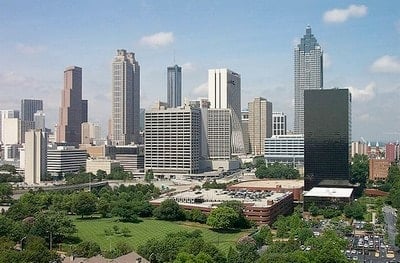
Atlanta continues to grow, but that growth is not distributed evenly across the city. Some ZIP codes are benefiting from new development, BeltLine investment, changing buyer preferences, neighborhood revitalization, and increased transaction activity, while others are experiencing a much more balanced or slower-moving market.
Atlanta itself has continued adding residents: U.S. Census Bureau estimates put the city's population at approximately 529,110 in 2025, up about 6.1% from its April 2020 population base. That population growth continues to create demand for housing, particularly in neighborhoods that combine location, amenities, transportation access, and relative affordability.
So which Atlanta ZIP codes are showing some of the most interesting momentum in 2026?
There is an important distinction: "growth" does not simply mean the ZIP code with the largest one-year increase in median sale price. Median prices can shift substantially depending on the mix of homes that happen to sell during a particular period. A better way to identify emerging areas is to look at several indicators together, including prices, sales activity, days on market, development, location, and longer-term neighborhood demand.
Here are several Atlanta ZIP codes buyers, sellers, and homeowners should be watching.
1. 30317: Kirkwood, Edgewood and East Lake
Why we're watching it: Strong sales activity, established neighborhood appeal, and continued Eastside demand.
ZIP code 30317 includes areas such as Kirkwood, Edgewood, and East Lake—neighborhoods that have transitioned from emerging markets into some of Atlanta's most established Eastside destinations.
Recent housing data points to continued momentum. Over the three months ending June 2026, Redfin reported a median sale price of approximately $639,000, up 3.5% from the same period a year earlier. Even more notable, 92 homes sold during June, an increase of nearly 58% from the prior year. Homes were selling in a median 27 days.
Several factors continue supporting the area:
- Proximity to the Atlanta BeltLine
- Popular neighborhood commercial districts
- Easy access to Downtown and Midtown
- Historic housing stock
- Newer infill construction
- Strong demand for walkable Eastside neighborhoods
Kirkwood in particular has evolved into a highly recognizable neighborhood with restaurants, local businesses, community events, and easy access to surrounding areas.
Explore the Kirkwood neighborhood guide or learn more about nearby Edgewood.
2. 30318: West Midtown, Underwood Hills and the Upper Westside
Why we're watching it: Development, employment access, changing housing stock, and continued westside investment.
Few parts of Atlanta have transformed as dramatically as 30318. This large ZIP code includes portions of West Midtown, Underwood Hills, Riverside, and Atlanta's Upper Westside.
Over the three months ending June 2026, Redfin reported a median sale price of approximately $424,000, up 5.1% year over year, while the number of homes sold increased 3.8%.
The longer-term story is about more than home prices. 30318 has benefited from:
- Major mixed-use development
- Adaptive reuse projects
- New restaurants and retail
- Multifamily development
- Access to Midtown and Downtown employment centers
- Continued investment along Atlanta's westside corridors
Housing varies widely, ranging from older cottages and established neighborhoods to townhomes, lofts, renovated properties, and newer construction.
That variety makes 30318 particularly interesting because buyers can often find several different lifestyles within the same ZIP code.
3. 30314: Atlanta's Historic Westside
Why we're watching it: Price movement, major institutional investment, and comparatively accessible entry prices.
ZIP code 30314 includes communities on Atlanta's historic Westside and areas surrounding major institutions and redevelopment corridors.
Redfin reported that the median sale price over the three months ending June 2026 was approximately $309,000, an increase of 10.5% from the same period a year earlier. The number of homes sold also increased by approximately 8.9%.
That does not mean every property in 30314 appreciated by 10.5%. Changes in the mix of homes selling can strongly influence short-term median-price statistics. Still, the recent numbers make 30314 an area worth monitoring.
Factors that could influence the ZIP code's longer-term trajectory include:
- Relative affordability compared with many Intown neighborhoods
- Proximity to Downtown Atlanta
- Continued redevelopment
- Institutional investment
- New residential construction
- Transportation and infrastructure improvements
For buyers interested in emerging neighborhoods, the Westside remains an area where block-by-block knowledge is particularly important.
4. 30310: West End, Adair Park and Southwest Atlanta
Why we're watching it: BeltLine connectivity, historic neighborhoods, affordability, and renewed buyer activity.
ZIP code 30310 includes several historic southwest Atlanta communities, including portions of West End, Adair Park, Oakland City, and surrounding neighborhoods.
Recent sales data has been particularly interesting. Redfin reported a median sale price of approximately $335,000 for the three months ending June 2026, up 11.6% year over year. Homes also sold considerably faster than during the comparable period a year earlier, with median market time declining from 64 days to 43 days.
However, another major housing index illustrates why one data point should never be used in isolation. Zillow's Home Value Index for 30310 showed typical home values down 7.5% year over year as of June 2026. The difference reflects different methodologies: Redfin's median sale price measures the homes that actually sold, while Zillow's index attempts to track changes in typical property values across the ZIP code.
That discrepancy makes 30310 a perfect example of why buyers and sellers should look deeper than a headline statistic.
Long-term demand may be influenced by:
- Atlanta BeltLine access
- Historic architecture
- Proximity to Downtown
- Neighborhood commercial redevelopment
- Relative affordability
- Continued investment in Southwest Atlanta
For investors and buyers comfortable evaluating property condition and hyperlocal market differences, 30310 remains an area worth watching closely.
Related reading: How Atlanta's BeltLine Impacts Neighborhood Home Values
5. 30316: East Atlanta, Ormewood Park and Reynoldstown
Why we're watching it: BeltLine proximity, strong neighborhood brands, and continued demand for Eastside living.
ZIP code 30316 covers some of Atlanta's most popular neighborhoods, including East Atlanta Village, Ormewood Park, and portions of Reynoldstown.
The headline median sale price was relatively flat in mid-2026, with Redfin showing a decline of less than 1% year over year. However, median price per square foot was up approximately 24.5% in its three-month data, illustrating how differently individual market measures can move within the same ZIP code.
Zillow's broader home-value index showed a more modest 1.5% year-over-year decline as of June 2026, with homes going pending in roughly 36 days.
So why include 30316 on a growth list?
Because its longer-term fundamentals remain compelling:
- Atlanta BeltLine access
- East Atlanta Village's dining and entertainment district
- Strong neighborhood identity
- Continued infill development
- Proximity to Downtown
- A mix of older homes, renovations, townhomes, and new construction
Growth is not always linear. Established neighborhoods can experience temporary pricing pauses while continuing to benefit from strong long-term demand.
Explore East Atlanta Village, Ormewood Park, and Reynoldstown.
What About Midtown and Buckhead?
Some of Atlanta's most desirable ZIP codes do not necessarily appear on a "fastest growth" list because they are already mature, relatively expensive markets.
Midtown, Buckhead, Ansley Park, and other established neighborhoods may offer different strengths:
- Scarcity
- Established luxury demand
- Walkability
- Employment access
- High-end amenities
- Long-term neighborhood recognition
For these areas, stability and liquidity may matter more than dramatic short-term appreciation.
Related reading:
- Condo Supply vs. Demand in Midtown Atlanta
- Buckhead Luxury Living Explained
- How Walkability Affects Home Prices in Atlanta
Why ZIP-Code Data Can Be Misleading
ZIP codes are useful for identifying broad trends, but they are not real estate markets in the traditional sense.
A single ZIP code may contain:
- Several neighborhoods
- Condos and single-family homes
- New construction and historic properties
- Luxury homes and entry-level housing
- Renovated and distressed properties
If more expensive homes happen to sell during one month, the median sale price can jump even if individual property values barely change.
Conversely, a ZIP code can experience substantial development and neighborhood improvement while its median price temporarily declines because more lower-priced homes sold during the measurement period.
Five Signs a ZIP Code May Have Long-Term Growth Potential
Instead of chasing whichever ZIP code posted the largest price increase last month, buyers should look for underlying fundamentals.
- Infrastructure investment: New trails, streetscapes, transit, parks, and public improvements can improve neighborhood desirability.
- Employment access: Shorter commutes to major job centers can support long-term housing demand.
- Commercial investment: Restaurants, grocery stores, retail, and mixed-use projects can improve daily convenience.
- Limited housing supply: Established neighborhoods with few opportunities to add inventory may experience stronger competition when demand rises.
- Lifestyle appeal: Walkability, parks, local businesses, and community identity increasingly influence where buyers choose to live.
The BeltLine Remains an Important Growth Driver
Several of the ZIP codes on this list benefit directly or indirectly from Atlanta BeltLine investment.
The BeltLine has influenced real estate by improving connectivity between neighborhoods and encouraging:
- Residential development
- Restaurant and retail investment
- Trail access
- Public-space improvements
- Greater pedestrian and bicycle connectivity
Properties near completed or planned BeltLine segments may benefit from increased buyer awareness, although buyers should never assume that proximity automatically guarantees appreciation.
Related reading: Buying Near the BeltLine: What to Know
Growth Can Create Opportunities—and Risks
Buying in a rapidly changing neighborhood can offer potential upside, but growth also introduces uncertainty.
Buyers should consider:
- Future construction
- Property tax increases
- Changing traffic patterns
- New density
- Renovation costs
- Block-by-block differences
- Whether anticipated development has actually been funded
A proposed project should not be treated the same as a completed amenity.
What Sellers Should Know
Homeowners in areas experiencing increased buyer activity should avoid automatically assuming that broad ZIP-code growth means their individual home has appreciated by the same percentage.
Home value still depends heavily on:
- Exact location
- Property condition
- Lot
- Renovations
- Square footage
- Parking
- Recent comparable sales
- Current competing inventory
A hyperlocal comparative market analysis is far more useful than applying a ZIP-code appreciation percentage to a previous home value.
Related reading:
What Buyers Should Know
For buyers, a growing ZIP code should be a starting point for research rather than a reason to purchase.
Evaluate:
- The individual neighborhood
- The specific street
- Recent comparable sales
- Property condition
- Nearby planned development
- Commute patterns
- Walkability
- Long-term ownership goals
The strongest investment is generally a home that works for your lifestyle and finances today while also benefiting from favorable long-term neighborhood fundamentals.
So, Which Atlanta ZIP Codes Are Growing the Most?
As of mid-2026, ZIP codes such as 30317, 30318, 30314, 30310, and 30316 are particularly interesting because they combine various forms of housing-market momentum with larger neighborhood growth stories.
But they are growing in different ways:
- 30317: Strong transaction activity and established Eastside demand
- 30318: Development-driven growth on Atlanta's Westside
- 30314: Emerging Westside investment and recent median-price gains
- 30310: BeltLine access, historic neighborhoods, and renewed sales momentum
- 30316: Established Eastside appeal and continued BeltLine-driven demand
The best opportunity ultimately depends on the property, purchase price, neighborhood, and buyer's long-term strategy.
Final Thoughts
Atlanta continues to grow, but the most interesting real estate opportunities are often found by looking below the citywide numbers. ZIP-code data can reveal where activity is changing, but neighborhood-level and property-level analysis is essential before making a decision.
For buyers, sellers, and investors, the goal should not simply be finding the ZIP code with the fastest recent appreciation. It should be identifying areas supported by lasting fundamentals such as employment, transportation, walkability, amenities, housing scarcity, and continued investment.
If you are considering buying, selling, or investing in Atlanta and want to understand which neighborhoods are gaining momentum, contact The Agency Atlanta Intown. Our team can help you evaluate current sales, neighborhood trends, development activity, and opportunities at the property level.