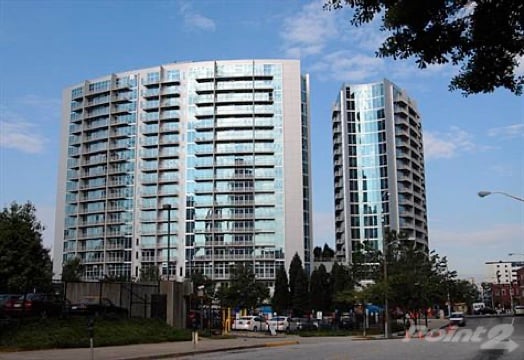
It may represent a relatively small one-time payment.
Or it may involve tens of thousands of dollars per unit for a major building project.
That does not automatically make the condo a bad purchase.
In some cases, the assessment is funding necessary work that improves the building, protects property values, or addresses deferred maintenance.
But buyers need to understand exactly what the assessment is for, how much their unit will owe, whether the seller or buyer is responsible, how the payment schedule works, and whether additional assessments may be coming.
Here is what Atlanta condo buyers should know before purchasing in a building with a current, pending, or recently completed special assessment.
Explore Atlanta condo buildings, browse homes and condos for sale, or contact The Agency Atlanta Intown for help evaluating a specific condominium building.
What Is a Condo Special Assessment?
A special assessment is an additional charge imposed by a condominium association outside the owner's regular monthly assessment.
Regular HOA assessments typically fund the association's normal operating expenses and reserve contributions.
A special assessment is generally used when the association needs additional money for a specific expense or project.
Examples may include:
- Roof replacement
- Exterior repairs
- Stucco restoration
- Window projects
- Elevator modernization
- Parking deck repairs
- Plumbing replacement
- Waterproofing
- Structural repairs
- Pool renovation
- Major landscaping or drainage work
- Insurance-related expenses
Why Do Condo Associations Use Special Assessments?
Condominium associations are responsible for maintaining common elements according to their governing documents.
Ideally, a well-funded reserve account allows the association to pay for predictable major repairs and replacements over time.
But reserves may not always be sufficient.
An assessment may be needed because:
- The project is unusually expensive
- Construction costs increased
- The building had inadequate reserves
- A repair became necessary sooner than expected
- An emergency occurred
- Insurance did not cover the full loss
- Previous boards delayed maintenance
- The association chose to keep regular monthly dues lower
The existence of a special assessment therefore tells you something important about the building, but it does not tell you the entire story.
A Special Assessment Is Not Automatically a Red Flag
Buyers sometimes react to any assessment as though it means the condominium is poorly managed.
That is too simplistic.
Buildings require maintenance.
Roofs wear out. Elevators age. Exterior systems need repair. Parking decks eventually require work.
A responsible association may determine that a major project should be completed before the condition becomes worse.
The better question is:
Why was the assessment necessary, and what does it tell us about the financial and physical condition of the building?
The Reason for the Assessment Matters
Not all special assessments should be evaluated the same way.
An assessment to modernize aging elevators presents a different issue from an assessment addressing serious structural damage.
An assessment funding an elective amenity renovation differs from one needed because the association has no money available for a failing roof.
Buyers should understand both the project and the circumstances that created the need for additional funding.
Ask Exactly What Work Is Being Done
Do not stop with a general description such as "exterior repairs."
Ask for specifics.
For example:
- What portion of the building is being repaired?
- What problem was discovered?
- Who evaluated it?
- Has an engineer or consultant been involved?
- What work has been recommended?
- Has a contractor been selected?
- Has construction begun?
- When is completion expected?
The more significant the project, the more important the supporting documentation becomes.
Find Out the Total Cost of the Project
The assessment assigned to your prospective unit is only one part of the picture.
You should also know the overall project cost.
If the association is undertaking a $5 million project, ask how the association plans to fund the entire amount.
The answer may include:
- Reserve funds
- Special assessments
- Association financing
- Insurance proceeds
- A combination of funding sources
Understanding the complete financial structure can help you evaluate whether the current assessment appears sufficient.
The Most Important Question: Is This the Final Amount?
A buyer should never assume that the currently announced assessment is necessarily the final cost.
Ask whether:
- The project has been fully bid
- A contract has been signed
- Contingencies are included
- Engineering is complete
- Additional damage could be discovered
- Change orders are expected
- The board has discussed supplemental assessments
A $10,000 assessment is much easier to evaluate if the project is nearly complete and fully funded than if construction has not begun and the total cost remains uncertain.
Review the Board Meeting Minutes
Board and association meeting minutes can be among the most valuable documents a condo buyer reviews.
They may reveal:
- When the problem was first identified
- How long the board has discussed it
- Different repair proposals
- Cost estimates
- Owner concerns
- Financing discussions
- Additional projects under consideration
- Insurance issues
One meeting notice may mention only the final vote.
Several months of minutes may reveal the complete history.
Look for More Than the Current Assessment
When reviewing condominium documents, do not search only for the words "special assessment."
Look for discussions involving:
- Roof
- Windows
- Elevators
- Plumbing
- Façade
- Stucco
- Parking deck
- Water intrusion
- Structural issues
- Insurance
- Reserves
- Engineering studies
A future assessment may be developing long before a formal assessment has been approved.
Review the Association's Financial Statements
The association's financial condition matters just as much as the assessment itself.
Look at:
- Operating cash
- Reserve balances
- Reserve contributions
- Accounts receivable
- Owner delinquencies
- Outstanding loans
- Major upcoming expenses
An assessment becomes easier to understand when viewed in the context of the association's overall finances.
Reserve Funding Is Especially Important
Reserve funds are intended to help pay for major future repairs and replacements.
A building with substantial reserves may be able to absorb a large portion of a major project without imposing a large assessment.
A building with limited reserves may have fewer options.
But reserve balance alone is not enough.
A large reserve may still be inadequate if the building has several expensive projects approaching at the same time.
Related reading: How to Read Condo Financial Statements Before Buying
Ask Whether the Building Has a Reserve Study
A reserve study evaluates major common components and estimates:
- Remaining useful life
- Expected replacement timing
- Estimated future costs
- Recommended reserve contributions
If one exists, compare it with the current assessment.
Ask whether the assessed project was anticipated in the study.
If not, find out why.
An Unexpected Assessment Can Mean Different Things
A project appearing unexpectedly does not always indicate poor planning.
A hidden condition may have been discovered.
Construction costs may have changed materially.
An insurance issue may have altered the building's financial needs.
But repeated unexpected assessments can justify a deeper investigation into reserve planning and maintenance practices.
How Is the Assessment Divided Among Owners?
Do not assume every owner pays the same amount.
How common expenses are allocated depends on the condominium declaration and applicable law.
Some buildings may allocate expenses based on each unit's stated percentage or fraction of common expense liability.
Certain expenses affecting limited common elements or fewer than all units can be treated differently depending on the governing documents and the nature of the expense.
For the unit you are considering, obtain the actual amount rather than attempting to calculate it from another owner's assessment.
How Is the Assessment Paid?
Associations may structure payment differently.
An assessment might be:
- Due in one lump sum
- Divided into monthly installments
- Divided into quarterly payments
- Payable over several years
Some associations may also finance a project and collect additional monthly amounts from owners to service the loan.
Ask for the official payment schedule.
Who Pays the Assessment When a Condo Is Sold?
This is one of the most important transaction questions.
Do not assume that the seller automatically pays a special assessment simply because it was approved before closing.
Responsibility can depend on:
- The purchase contract
- The condominium documents
- When the assessment became due
- Whether payments are already outstanding
- Negotiated terms between buyer and seller
The contract should address the issue clearly.
Negotiate the Assessment as Part of the Purchase
A condo with an assessment can still be purchased under several possible structures.
Depending on the circumstances, buyer and seller might negotiate for:
- Seller payment of the assessment before closing
- Seller payment of the remaining assessment balance at closing
- A purchase-price adjustment
- A closing credit, subject to lender requirements
- Buyer assumption of future installments
There is no single approach that fits every transaction.
What matters is that responsibility is clearly documented.
Do Not Rely on a Verbal Understanding
If the seller says, "I'll take care of the assessment," that should be reflected appropriately in the transaction documents.
The parties should understand:
- The exact balance
- When it is payable
- How it will be handled at closing
- Whether additional installments could become due later
Ambiguity around an assessment can create unnecessary closing problems.
Existing Unpaid Assessments Matter
Unpaid condominium assessments are not something a buyer should casually inherit without understanding the legal and financial consequences.
The closing process should verify amounts due to the association and determine how they will be handled.
Georgia condominium law provides mechanisms relating to owner liability for assessments and association statements regarding outstanding amounts, which is another reason association documentation and closing coordination are important.
Can a Special Assessment Affect Financing?
Yes.
A lender financing a condominium purchase may evaluate both the individual borrower and the condominium project.
A significant assessment can raise questions about:
- The reason for the assessment
- The building's financial condition
- Deferred maintenance
- Structural issues
- Insurance
- Association reserves
- Owner delinquencies
The existence of an assessment does not automatically make a condo unfinanceable.
But the underlying reason for the assessment can matter significantly.
Talk to the Lender Early
If you are financing the purchase, provide the lender with information about the assessment as early as possible.
Do not wait until the final days before closing.
The lender may need condominium documents, questionnaires, budgets, insurance information, or project details before approving the building.
Discovering a financing issue late in the transaction can create unnecessary complications.
Special Assessments Can Affect Monthly Affordability
A buyer may qualify comfortably for the mortgage and regular HOA fee but still need to account for assessment installments.
Suppose the condo has:
- $3,000 monthly mortgage-related housing cost
- $800 regular HOA fee
- $500 monthly special-assessment installment
The buyer's actual monthly outlay during the assessment period becomes materially higher.
That should be included in the ownership budget.
Do Not Confuse the Assessment With the Regular HOA Fee
The regular assessment may remain unchanged while the special assessment is collected separately.
Or the association may increase regular assessments for other reasons at the same time.
Ask for a complete breakdown of:
- Current monthly HOA assessment
- Special assessment installment
- Any announced HOA increase
- Other recurring charges
That provides a more accurate picture of current ownership costs.
Can a Special Assessment Hurt Resale?
It can affect resale, particularly while the assessment is active or while the underlying project remains uncertain.
Buyers may be hesitant if:
- The remaining balance is large
- The project is not fully funded
- Construction has not begun
- Additional assessments are possible
- The building has recurring financial problems
But the effect can change once the work is completed.
A Completed Project Can Improve the Building
Suppose an assessment funds:
- New elevators
- Exterior restoration
- A new roof
- Parking deck repairs
- Updated common areas
Once the work is complete and paid for, future buyers may see a building with major capital improvements already addressed.
In that situation, the assessment may ultimately strengthen the physical condition of the property.
Timing Changes the Risk
Compare two scenarios.
Scenario One
The association has approved a $15,000-per-unit assessment, but:
- Engineering is incomplete
- No contractor has been selected
- Construction has not started
- The total project cost may increase
There is still substantial uncertainty.
Scenario Two
The association approved the same $15,000 assessment, but:
- The project is fully contracted
- Construction is 90% complete
- The seller will pay the remaining assessment at closing
- The board reports no anticipated supplemental assessment
The nominal assessment is identical.
The buyer's risk is very different.
Special Assessments Can Reveal Deferred Maintenance
One important question is whether the project should have been addressed earlier.
If meeting minutes show years of warnings followed by delayed action, buyers may reasonably investigate whether other projects have also been postponed.
Look beyond the immediate repair.
Ask whether similar deferred maintenance exists elsewhere in the building.
Repeated Special Assessments Deserve Attention
One assessment does not necessarily indicate a pattern.
Several assessments over a relatively short period may.
Ask:
- Has the building assessed owners previously?
- How frequently?
- For what projects?
- How large were the assessments?
- Did they stay within budget?
Repeated assessments may indicate that the building relies heavily on owners for capital projects rather than accumulating sufficient reserves.
Low HOA Fees Are Not Always an Advantage
Buyers are naturally attracted to lower monthly HOA fees.
But unusually low fees can sometimes come with a tradeoff.
If the association is not contributing enough to reserves, owners may face larger assessments when major components need replacement.
The better question is not:
Which building has the lowest HOA fee?
It is:
Is this association collecting enough money to operate and maintain the property responsibly?
Higher HOA Fees Do Not Guarantee Financial Strength
The reverse is also true.
A building can have relatively high monthly assessments and still have inadequate reserves.
Expenses may simply be higher.
The association may have:
- More amenities
- More staff
- Higher insurance costs
- Older mechanical systems
- Greater maintenance needs
Evaluate the actual financial statements rather than making assumptions based on the monthly fee.
Insurance Can Be Connected to Special Assessments
Condo insurance has become an increasingly important part of building finances.
Premium increases, deductibles, coverage changes, and claims can affect association budgets.
In some circumstances, an association may need additional owner funding to address an expense not fully covered by insurance.
Ask whether insurance played any role in the current assessment.
Related reading: How Condo Insurance Works in Georgia
Ask About Association Loans
Some associations finance major projects rather than collecting the entire amount from owners immediately.
If the association has borrowed money, buyers should understand:
- Original loan amount
- Outstanding balance
- Interest rate
- Loan term
- Monthly debt service
- How owners are assessed for repayment
An association loan can spread the cost of a major project over time, but it remains a financial obligation of the association.
Special Assessments Can Affect Investors Differently
For a rental investor, the assessment affects the economics of the property.
Suppose a condo produces $6,000 in annual cash flow before an assessment.
A $12,000 assessment can effectively eliminate two years of that projected cash flow if the investor bears the full cost.
Investors should incorporate assessments into:
- Cash-on-cash return
- Holding-period analysis
- Expected capital expenditures
- Exit strategy
Related reading: The Risks and Rewards of Condo Investing
Can You Negotiate a Lower Purchase Price Because of an Assessment?
You can negotiate.
Whether the seller agrees depends on the circumstances.
A buyer may reasonably consider the remaining financial obligation when evaluating an offer.
But the seller may respond that:
- The assessment is already reflected in the asking price
- The seller intends to pay it
- The project materially improves the property
- Other buyers are willing to accept it
The relevant question is the condo's total value after considering both the assessment and the resulting building condition.
Do Not Automatically Subtract the Assessment Dollar for Dollar
Suppose a condo has a $20,000 assessment for a major exterior restoration project.
It may be tempting to conclude that the condo is worth exactly $20,000 less.
That may or may not reflect the market.
If the seller pays the assessment and the building emerges with substantial capital work completed, the unit could compare favorably with one in another building facing similar work in the future.
Assessment amount and market-value impact are related, but they are not necessarily identical.
Look at the Buildings You Are Comparing
If one building has a special assessment and another does not, ask why.
The building without the assessment may have:
- Stronger reserves
- Newer systems
- Already completed the work
Or it may simply not have confronted the same project yet.
Do not compare buildings based solely on whether one currently has an assessment.
Compare their overall physical and financial positions.
Read the Condo Questionnaire Carefully
When financing is involved, the lender may obtain a condominium questionnaire containing information about the association.
Depending on the form, it may address topics such as:
- Special assessments
- Delinquencies
- Litigation
- Insurance
- Commercial space
- Owner occupancy
- Major repairs
The questionnaire can provide useful information, but buyers should not rely on it as a replacement for their own document review.
Related reading: What Is a Condo Questionnaire and Why Does It Matter?
What Does Georgia Law Say?
Georgia's Condominium Act addresses the allocation and collection of common expenses and special assessments.
The exact rules can depend on the condominium instruments and the type of expense involved.
For condominium instruments recorded on or after July 1, 2015, Georgia law also limits the board's ability, in certain circumstances, to impose a special assessment exceeding one-sixth of the unit's annual common expense assessment in a fiscal year without approval from a majority of the unit owners.
There are statutory exceptions, and older condominium instruments may be governed differently.
Because each declaration is different, buyers should not assume that one building's voting or assessment process applies to another.
The Governing Documents Control Many Important Details
Review the:
- Declaration
- Bylaws
- Rules and regulations
- Assessment notices
- Association resolutions
These documents can explain:
- How expenses are allocated
- What authority the board has
- When owner approval is required
- How assessments become due
- What happens if an owner does not pay
Questions Buyers Should Ask About a Special Assessment
- What is the assessment for?
- What is the total project cost?
- How much is assigned to this unit?
- How was the amount allocated?
- When was the assessment approved?
- How much has already been paid?
- What balance remains?
- What is the payment schedule?
- Who will pay the remaining balance at closing?
- Has construction begun?
- Has the association signed a final contract?
- Is the project fully funded?
- Could there be additional assessments?
- Were reserves used?
- How much remains in reserves?
- Does the building have a reserve study?
- Are other major projects coming soon?
- Does the association have any outstanding loans?
- Have there been other recent special assessments?
- Could the assessment affect financing?
Documents Worth Reviewing Before Buying
For a condo with an assessment, buyers should consider reviewing:
- Assessment notice
- Project scope
- Engineering reports
- Contracts or proposals
- Board meeting minutes
- Annual meeting minutes
- Current budget
- Recent financial statements
- Reserve study
- Insurance information
- Association loan documents
- Condominium declaration
- Bylaws
Not every document will be available in every transaction, but the goal is to develop as complete a picture as reasonably possible.
When a Special Assessment May Be Less Concerning
A buyer may feel more comfortable when:
- The purpose of the assessment is clear
- The project addresses a known capital need
- Engineering and bidding are complete
- The contract is signed
- The project is fully funded
- Construction is underway or complete
- The seller is paying the remaining balance
- Reserves remain healthy afterward
- No major additional projects are expected soon
When a Special Assessment Deserves More Investigation
Additional scrutiny may be appropriate when:
- The project scope is unclear
- The cost is still increasing
- Engineering is incomplete
- There are unresolved structural issues
- The association has very low reserves
- Owners have experienced repeated assessments
- The building has substantial delinquency
- A second major project is already being discussed
- The assessment is tied to unresolved insurance or litigation issues
- The lender expresses concern about the project
Should You Walk Away From a Condo With a Special Assessment?
Not necessarily.
The better approach is to understand what you would be buying.
A condo in a building completing necessary capital improvements may be a better long-term ownership proposition than a condo in a similar building that has delayed the same work.
On the other hand, an assessment can expose deeper financial or maintenance problems that materially change the risk of the purchase.
The assessment itself is only one piece of evidence.
Think Beyond Closing Day
Buyers naturally focus on the assessment balance due today.
But the more important long-term questions may be:
- What condition will the building be in after this project?
- How much money will remain in reserves?
- What major systems need work next?
- Will HOA fees likely need to rise?
- Is the association planning responsibly?
A condo is not only the unit behind your front door.
You are also becoming part of the financial structure responsible for the entire property.
Final Thoughts
A condo special assessment should get a buyer's attention, but it should not automatically end the purchase.
The important questions are why the assessment exists, whether the project is properly defined and funded, how much the unit owes, who will pay that amount, and what the assessment reveals about the association's broader financial health.
A well-managed building may occasionally need an assessment for a major capital project.
A poorly funded building may rely on assessments repeatedly because it has failed to plan adequately for predictable expenses.
Those are very different situations.
Before purchasing, review the financial statements, reserves, board minutes, project documents, governing documents, and assessment schedule. If financing is involved, speak with the lender early. And make sure the purchase contract clearly addresses responsibility for any outstanding assessment.
If you're considering an Atlanta condo with a current or proposed special assessment, contact The Agency Atlanta Intown. We can help you evaluate the assessment alongside the building's finances, recent sales, current competition, property condition, and the other factors that should influence your purchase decision.
This article is provided for general informational purposes and is not legal, financial, accounting, or lending advice. Condominium declarations, assessment procedures, contracts, financing requirements, and Georgia law can affect each situation differently. Buyers should review the specific condominium documents and transaction terms and consult appropriate legal, lending, or financial professionals when needed.