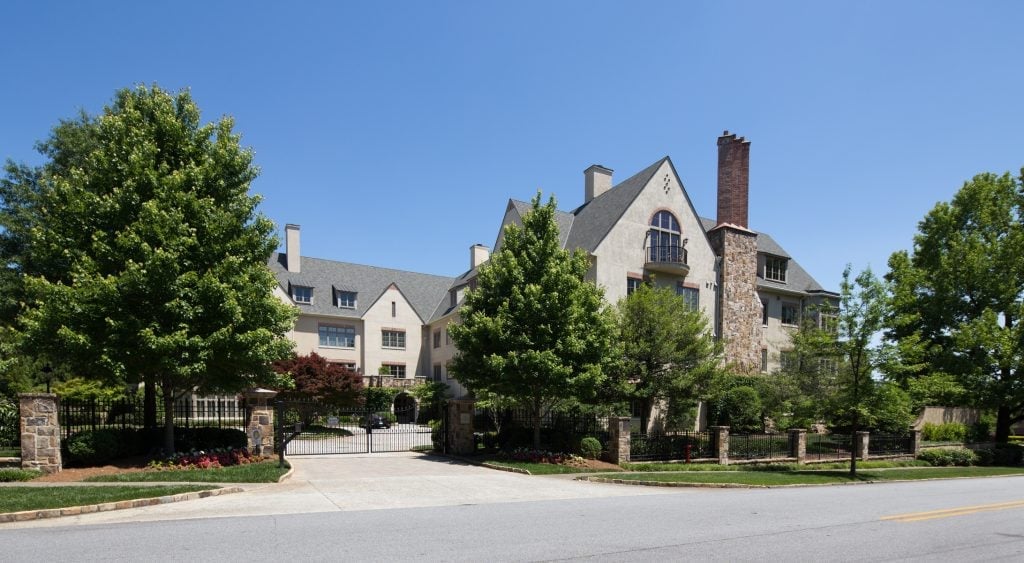
But a condo owner is buying into something larger than the residence itself.
The building matters.
Two condos with similar square footage in the same Atlanta neighborhood can perform very differently over time because one is located in a well-maintained, financially stable, desirable building while the other faces deferred maintenance, rising expenses, financing problems, or declining buyer demand.
There is no single feature that guarantees a condominium building will hold its value. Instead, long-term desirability usually comes from a combination of location, financial health, maintenance, management, amenities, unit characteristics, insurance, financing availability, and the overall ownership experience.
For buyers thinking beyond today's purchase price, here are some of the most important characteristics to evaluate.
Explore Atlanta condo buildings, browse homes and condos for sale, or contact The Agency Atlanta Intown for help comparing individual buildings.
1. Location Still Comes First
A condominium building cannot change its location.
Interiors can be renovated. Amenities can be updated. Lobbies can be redesigned. But proximity to the things buyers value is much harder to replicate.
In Atlanta, location advantages may include access to:
- Employment centers
- MARTA
- Piedmont Park
- The Atlanta BeltLine
- Restaurants
- Shopping
- Arts and cultural institutions
- Healthcare
- Major transportation corridors
A building in a location that remains desirable to future buyers begins with an important advantage.
2. Micro-Location Matters Too
Neighborhood alone does not tell the entire story.
Two Midtown buildings may be only a few blocks apart but offer very different experiences.
One may overlook Piedmont Park. Another may provide easier MARTA access. One may sit directly along Peachtree Street, while another offers a quieter residential setting.
Even within the same neighborhood, buyers may value differences involving:
- Traffic
- Walkability
- Street noise
- Nearby development
- Park access
- Views
- Retail access
When evaluating long-term value, consider the building's exact location rather than relying only on the neighborhood name.
3. Strong Association Finances Are Fundamental
A condominium building is a shared financial enterprise.
Owners collectively fund the maintenance and operation of the common property through association assessments.
A financially healthy association generally has a realistic operating budget, appropriate reserves, responsible collection practices, and a plan for major future expenses.
Buyers should investigate:
- Annual budgets
- Reserve balances
- Reserve contributions
- Recent financial statements
- Owner delinquencies
- Association debt
- Special assessments
- Major upcoming projects
A beautiful condo in a financially troubled association may carry risks that are not visible during a showing.
Related reading: How to Read Condo Financial Statements Before Buying
4. Healthy Reserves Help Protect the Building
Condominium buildings eventually require major repairs and replacements.
Depending on the property, these may include:
- Roofs
- Elevators
- Exterior waterproofing
- Windows
- Parking structures
- Plumbing systems
- Mechanical equipment
- Pool equipment
- Common-area renovations
Reserve funds allow an association to accumulate money for these longer-term expenses.
There is no universal reserve balance that makes every building financially strong. A smaller low-rise condominium and a full-service high-rise have very different capital needs.
The more useful question is whether reserves and future contributions reasonably align with the building's expected expenses.
5. A Reserve Study Can Reveal Future Needs
A reserve study evaluates major common components, their expected useful lives, anticipated replacement costs, and the association's funding strategy.
For buyers, this can provide valuable context.
A building may have a substantial amount of money in reserves, but that number means little without understanding what the association expects to spend.
If elevators, roofing, exterior systems, and a parking deck all require major work in the next several years, a seemingly large reserve balance may not be as comfortable as it initially appears.
Conversely, a building with recently completed capital projects may be positioned differently.
6. Consistent Maintenance Protects More Than Appearance
Well-maintained buildings tend to age differently from properties where repairs are repeatedly postponed.
Maintenance affects both the ownership experience and future costs.
Look beyond fresh paint and attractive furniture in the lobby.
Pay attention to:
- Exterior condition
- Elevators
- Hallways
- Parking areas
- Landscaping
- Pool and amenity areas
- Water intrusion
- Mechanical systems
- Common plumbing issues
A building that addresses problems proactively may be better positioned than one that waits until repairs become emergencies.
7. Deferred Maintenance Can Eventually Affect Resale
Deferred maintenance can create a cycle.
Repairs are postponed to keep assessments low. Problems become more expensive. A large special assessment becomes necessary. Buyers become concerned. Financing may become more complicated. Sellers face additional competition.
This does not mean every older building is risky.
Many established Atlanta condominium buildings have operated successfully for decades because their associations continually maintain and improve them.
Building age is less important than how the property has been managed over that time.
8. Stable HOA Fees Can Be More Attractive Than Artificially Low Fees
Buyers naturally pay attention to monthly HOA fees.
But the lowest fee is not necessarily the best fee.
If assessments are too low to fund operations and reserves adequately, owners may eventually face:
- Large annual increases
- Special assessments
- Deferred maintenance
- Reduced services
A well-run building attempts to balance affordability with the actual cost of maintaining the property.
Buyers should evaluate what the fee includes and whether the association appears to be funding its responsibilities appropriately.
Related reading: What Buyers Need to Know About HOA Fees
9. Special Assessments Are Not Automatically a Sign of a Bad Building
A special assessment can concern buyers, but context matters.
An assessment may be used to fund a necessary capital improvement that strengthens the property for the future.
The important questions include:
- Why was the assessment necessary?
- What work is being completed?
- How large is the assessment?
- Were reserves insufficient?
- Is this part of a recurring pattern?
- Are additional projects expected?
One well-planned assessment for a major project can be very different from repeated emergency assessments caused by chronic underfunding.
10. Insurance Has Become Increasingly Important
The condominium association's master insurance policy is an important part of the building's financial and financing picture.
Insurance premiums can affect HOA budgets, and coverage characteristics may affect whether lenders are comfortable financing units in the project.
Buyers should understand the distinction between the association's master policy and the individual owner's HO-6 policy.
A financially attractive condo can become much less attractive if insurance problems create large assessment increases or financing difficulties.
11. Financing Availability Supports the Buyer Pool
Long-term value depends partly on how many future buyers can realistically purchase a unit.
A cash buyer may not personally care whether a building qualifies for conventional financing today.
But when that owner eventually sells, the next buyer may need a mortgage.
Lenders can review factors involving:
- Insurance
- Association finances
- Reserves
- Litigation
- Deferred maintenance
- Commercial space
- Ownership concentration
- Other project characteristics
A building accessible to a broad range of financing options may have a larger potential buyer pool than one requiring specialized financing or cash.
Related reading: What Is a Condo Questionnaire and Why Does It Matter?
12. Professional Management Can Make a Difference
Condominium management involves much more than maintaining the lobby.
Depending on the building, management may coordinate:
- Vendors
- Maintenance
- Resident communication
- Financial administration
- Insurance matters
- Capital projects
- Move-ins and move-outs
- Rule enforcement
- Emergency response
Consistent management and an engaged board can help a building address issues before they become larger problems.
13. Amenities Need to Match What Buyers Actually Want
Amenities can help distinguish a condo building, but more amenities do not automatically equal greater value.
Every amenity costs money to maintain.
The most useful amenities are often those residents actually use and future buyers understand.
Depending on the building and price point, these may include:
- Fitness center
- Pool
- Concierge
- Clubroom
- Guest suites
- Dog park or pet area
- Package facilities
- Outdoor entertaining areas
- EV charging
- Coworking space
Related reading: Which Buckhead Condo Buildings Have the Best Amenities?
14. Amenities Have to Age Well
A pool or fitness center that looked impressive 20 years ago may not have the same impact today if it has not been updated.
Successful buildings often reinvest periodically in common areas so they remain competitive with newer properties.
This does not require chasing every design trend.
Clean, functional, well-maintained amenities often matter more than elaborate spaces that quickly become dated.
15. Parking Can Have Lasting Value
Parking is easy to overlook until two otherwise similar condos are compared.
In Midtown and Buckhead, differences may include:
- No dedicated parking
- One assigned space
- Two tandem spaces
- Two side-by-side spaces
- Covered parking
- Uncovered parking
- Deeded parking
- Valet parking
Parking can become particularly important for larger units that are likely to attract households with more than one vehicle.
A two-bedroom luxury condo with only one parking space may face a different resale market from a comparable unit with two convenient spaces.
16. Storage Adds Practical Value
Storage becomes especially important in condominiums because owners do not typically have attics, basements, garages, and sheds.
Dedicated storage can accommodate:
- Seasonal decorations
- Luggage
- Bicycles
- Sports equipment
- Household supplies
For downsizers moving from larger homes, usable storage can influence which condo feels practical enough for everyday living.
17. Floor Plans Need to Remain Functional
Interior design trends change. Functional floor plans tend to matter much longer.
Characteristics that may support long-term buyer appeal include:
- Usable bedrooms
- Good furniture placement
- Reasonable storage
- Natural light
- Separation between bedrooms
- Functional kitchens
- Space for working from home
- Usable outdoor areas
An unusual layout may appeal to one buyer while narrowing the resale audience later.
18. Views Can Create Scarcity
One of the strongest advantages a high-rise condo can have is something another unit cannot easily reproduce.
A protected or particularly desirable view may provide that scarcity.
In Atlanta, buyers may value views of:
- Piedmont Park
- Midtown skyline
- Downtown skyline
- Buckhead skyline
- Atlanta's tree canopy
- Sunrise or sunset
But buyers should distinguish between a view that is likely to remain and one dependent on an undeveloped parcel next door.
19. The Surrounding Development Pipeline Matters
New development can help or hurt an existing condominium building.
A new grocery store, restaurant district, park, trail, or mixed-use project may strengthen the surrounding location.
A new tower immediately next door could affect views, privacy, traffic, or construction noise.
Before purchasing a condo primarily because of its view or immediate surroundings, investigate nearby parcels and announced development when possible.
20. Owner-Occupancy and Rental Policies Can Affect Demand
Rental policies influence who can buy and how units can be used.
Very restrictive leasing policies may discourage investors.
Very permissive policies may result in a high concentration of rental units.
Neither automatically determines whether a building is good or bad.
The important issue is how the rules affect the building's financing, ownership profile, resident experience, and future buyer pool.
Related reading: How HOA Rules Can Affect Condo Buyers
21. Consistent Rule Enforcement Supports the Ownership Experience
Condominium rules can address issues such as:
- Noise
- Pets
- Parking
- Rentals
- Renovations
- Moves
- Common areas
Rules that exist only on paper provide limited benefit.
Consistent and reasonable administration can help maintain the experience buyers believed they were purchasing.
22. Reputation Can Become Part of a Building's Value
Over time, some condo buildings develop strong recognition among local buyers and real estate professionals.
A building may become known for:
- Large floor plans
- Excellent views
- Strong service
- Good management
- Quality construction
- Desirable amenities
- Location
That recognition can help future buyers feel more comfortable considering the property.
Reputation is difficult to quantify, but it can influence demand.
23. Too Much Similar Inventory Can Affect Resale
Condo owners compete not only with other buildings but often with other owners in the same building.
If six nearly identical one-bedroom units are listed simultaneously, buyers have leverage.
They can compare price, floor, view, condition, and seller motivation.
Buildings with highly repetitive floor plans may experience periods when multiple nearly identical units compete against one another.
For an individual owner, distinctive characteristics can become valuable.
24. Unique Units Can Have an Advantage
A corner residence, penthouse, unusually large floor plan, exceptional terrace, two parking spaces, or protected view may have less direct competition.
Scarcity can support demand when the feature is something buyers value.
But uniqueness alone does not guarantee a premium.
The feature still needs to be desirable to the future buyer pool.
25. Renovations Should Fit the Building
Renovation can help a condo compete, but buyers should consider the building's overall price ceiling.
Installing extremely expensive finishes in a building where comparable units sell within a much lower range may make the residence beautiful without producing an equivalent financial return.
The strongest renovations often improve:
- Functionality
- Lighting
- Storage
- Kitchen usability
- Bathrooms
- Flooring
- Overall visual consistency
The goal should be to make the unit competitive for its building and buyer profile.
26. Common Areas Influence First Impressions
Buyers begin evaluating a condominium before entering the unit.
They see:
- Entrance
- Landscaping
- Lobby
- Front desk
- Elevators
- Hallways
- Parking
A beautifully renovated unit can still be affected by neglected common areas.
Buildings that maintain their shared spaces help every owner present a stronger product when it is time to sell.
27. Adaptability Helps Buildings Stay Competitive
Buyer expectations change over time.
Features that have become more important include:
- Reliable high-speed internet
- Package management
- EV charging
- Pet amenities
- Work-from-home space
- Updated fitness facilities
- Secure building access
A building does not need every new amenity, but associations willing to adapt thoughtfully may remain more competitive with newer construction.
28. Newer Is Not Automatically Better
New construction has obvious appeal, but established buildings can have advantages.
Buyers may be able to evaluate years of:
- Financial history
- Resale activity
- Association management
- Maintenance performance
- Actual operating expenses
Some older buildings also offer larger floor plans or locations that would be difficult to reproduce today.
The relevant question is not simply the building's age. It is how well the building has aged.
29. Resale History Can Reveal a Pattern
Before purchasing, review several years of sales within the building when possible.
Look at:
- Sale prices
- Price per square foot
- Days on market
- Seller concessions
- Renovated vs. original units
- View premiums
- Parking differences
One unusually high or low sale should not define the entire building.
A longer history can provide a better picture of how buyers have valued different units.
30. Liquidity Matters Alongside Appreciation
Owners often think about value in terms of whether a condo appreciates.
Another important consideration is liquidity: how readily can the property attract a buyer when you need to sell?
A condo may have increased in theoretical value but still be difficult to sell because of financing problems, unusually high fees, a large assessment, or excessive competing inventory.
A building that consistently attracts a broad pool of qualified buyers may provide an advantage that is not captured by appreciation percentages alone.
What Are the Biggest Warning Signs?
No single issue automatically means a buyer should reject a building, but several conditions deserve closer investigation:
- Repeated special assessments
- Very low reserves relative to expected projects
- Significant deferred maintenance
- Large numbers of delinquent owners
- Major unresolved litigation
- Insurance problems
- Difficulty obtaining conventional financing
- Rapidly increasing HOA fees without a clear explanation
- Persistent water intrusion or structural issues
- Large amounts of chronically unsold inventory
The goal is not to find a building with no problems. Every condominium eventually faces repairs and financial decisions.
The goal is to understand whether those challenges are being managed responsibly.
What Are the Signs of a Strong Condo Building?
Positive indicators can include:
- Consistent maintenance
- Thoughtful reserve planning
- Transparent financial records
- Reasonable assessments
- Well-maintained common areas
- Responsive management
- Stable financing availability
- Desirable location
- Functional floor plans
- Competitive amenities
- Regular resale activity
No building needs to score perfectly in every category.
What matters is the overall combination.
10 Questions to Ask Before Buying Into a Condo Building
- How much does the association currently hold in reserves?
- Is there a recent reserve study?
- What major capital projects are expected during the next several years?
- Have there been recent special assessments?
- Are additional assessments being discussed?
- Has the building experienced financing or insurance problems?
- How have HOA fees changed during the past several years?
- What percentage of units are owner-occupied versus rented?
- How quickly have comparable units been selling?
- What makes this building more desirable than nearby alternatives?
Think About the Next Buyer
One of the best ways to evaluate a condo purchase is to imagine selling it.
Who will the next buyer be?
What will they value?
Will they be able to finance the property?
Will the floor plan still be functional?
Will the building's amenities remain competitive?
Will the association be financially prepared for an aging building?
A property that appeals to a broad future buyer pool may offer greater flexibility when your own plans eventually change.
Final Thoughts
A condo building holds its value over time because buyers continue to want to live there and can realistically purchase there.
Location matters, but location alone is not enough.
Strong associations maintain their buildings, plan for future expenses, fund reserves responsibly, manage insurance and financing issues, keep amenities relevant, and preserve an ownership experience that remains attractive to future buyers.
For an individual owner, unit characteristics matter too. Views, parking, storage, floor plan, condition, and renovations can all influence how one residence performs relative to others in the same building.
This is why buying a condo requires evaluating two investments at once: the individual residence and the condominium building surrounding it.
If you're considering an Atlanta condo, contact The Agency Atlanta Intown. Our team can help you compare buildings, recent sales, HOA finances, assessments, amenities, parking, views, and other factors that can influence both your ownership experience and eventual resale.
This article is provided for general informational purposes and is not financial, legal, insurance, or investment advice. Condominium finances, insurance, rules, maintenance obligations, and lending requirements vary by property and can change over time. Buyers should review current association documents and consult appropriate professionals before purchasing.