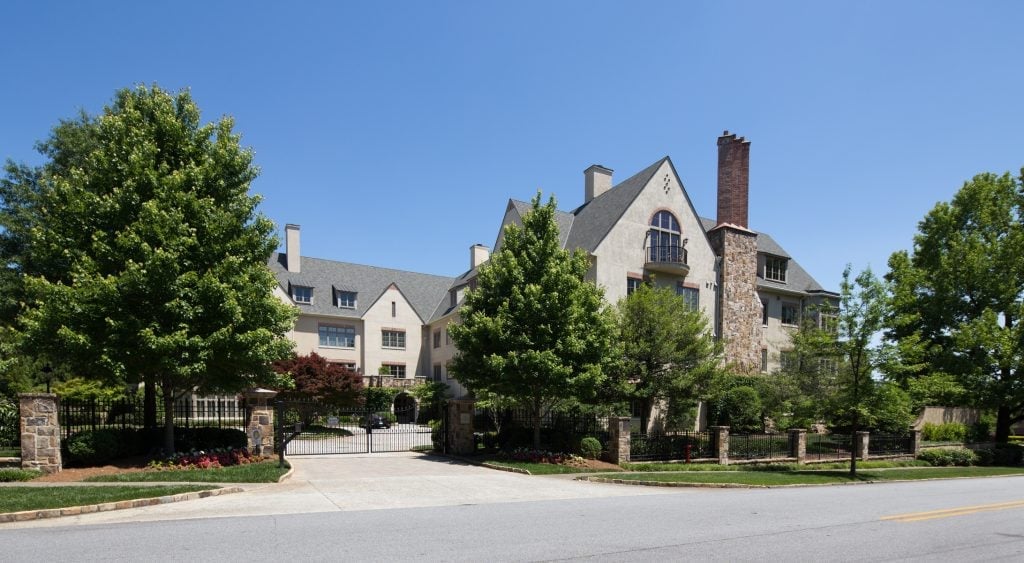
But nobody is making an offer.
For a seller, this can be more confusing than receiving no showings at all.
The good news is that showing activity provides useful information. If buyers are willing to visit the property, the listing has already cleared an important hurdle. Something about the price, location, photographs, property type, or features is compelling enough to earn a place on their tour.
The question becomes: what is stopping those buyers from taking the next step?
When an Atlanta home or condo receives substantial showing activity without generating offers, the answer usually becomes clearer by examining buyer feedback, competing properties, condition, presentation, and price together.
Here is how sellers can interpret that activity and decide what to do next.
Thinking about selling? Browse recent sales, request a home valuation, or contact The Agency Atlanta Intown for a property-specific analysis.
First, Showings Are a Positive Signal
A showing means the property successfully made it through a buyer's initial screening process.
Before scheduling an appointment, most buyers have already seen:
- The asking price
- Photographs
- Square footage
- Bedrooms and bathrooms
- Approximate location
- Major property features
- HOA fees, when applicable
They have decided the property is worth seeing in person.
That is useful information.
A listing receiving no showings may have an exposure, presentation, access, or pricing problem before buyers ever reach the property.
A listing receiving many showings but no offers usually has a different problem.
The Showing-to-Offer Gap
Think of the listing process as a funnel.
Buyers first discover the property online.
Some decide to save it.
A smaller group schedules a showing.
Some of those buyers become seriously interested.
Eventually, one or more decide to write an offer.
If buyers are moving through the funnel until the showing stage and then consistently stopping, something about the in-person experience or value proposition is preventing conversion.
The goal is to identify what that is.
Possibility #1: Buyers Like the Home but Not at the Current Price
Price is one of the most common explanations.
This does not necessarily mean buyers dislike the property.
In fact, they may like it very much.
But real estate decisions are comparative.
A buyer rarely asks only:
Do I like this home?
The more important question is:
Do I like this home enough to buy it instead of the other options available at this price?
A property can be attractive and still be priced above what buyers perceive as appropriate for its condition, location, view, floor plan, or amenities.
Price and Value Are Different
A seller chooses an asking price.
Buyers determine whether the property represents sufficient value at that price.
Suppose a condo is listed at $500,000.
A buyer may love the floor plan and location but discover that another $500,000 condo offers:
- A renovated kitchen
- A better view
- Two parking spaces
- A larger balcony
- Lower HOA fees
The buyer may conclude that the first condo is worth owning, but not at the same price as the alternative.
That distinction is important.
Possibility #2: The Photos Created Different Expectations
Strong photography should attract buyers, but the in-person experience still needs to support what buyers saw online.
A gap between the photographs and reality can reduce enthusiasm.
Examples might include:
- Rooms appearing larger online than they feel in person
- A view being less expansive than expected
- Nearby buildings being more noticeable
- Natural light being different from the photographs
- Condition issues becoming apparent during the showing
- A floor plan feeling less functional in person
Professional photography should present a property at its best without creating expectations the actual home cannot support.
Possibility #3: Condition Is Holding Buyers Back
Condition can have a major effect on whether showing activity becomes an offer.
Buyers may see potential but calculate the work required after closing.
Common objections include:
- Older kitchens
- Dated bathrooms
- Worn flooring
- Old carpet
- Interior paint
- Older appliances
- Visible maintenance issues
- Aging HVAC or other major systems
Sellers sometimes focus on the actual dollar cost of the work.
Buyers may also factor in inconvenience, uncertainty, time, and the possibility that renovation will cost more than expected.
Buyers Often Discount Renovation More Than Sellers Expect
Suppose a seller believes a kitchen needs $30,000 of updating.
A buyer may mentally discount the property by more than $30,000.
Why?
Because the buyer may be considering:
- Construction uncertainty
- Design expenses
- Permitting
- Contractor availability
- Unexpected repairs
- Living through renovation
- The time required to complete the project
That is why an unrenovated home does not always sell for the renovated value minus the literal cost of improvements.
Possibility #4: The Home Is Vacant and Buyers Cannot Visualize It
Vacant properties sometimes appear straightforward to sellers but confusing to buyers.
Without furniture, buyers may struggle to understand:
- Where a sofa should go
- Whether a dining table fits
- How large a bedroom really is
- Whether a den can function as an office
- How an unusual room should be used
Vacancy can also make buyers focus more heavily on imperfections because there is nothing else in the room competing for attention.
Strategic physical staging can help buyers understand scale and function.
Related reading: How to Stage a Luxury Home for Maximum Impact
Virtual Staging Has Limits
Virtual staging can be useful for online marketing because it demonstrates how an empty room might function.
But the buyer still walks into an empty residence during the showing.
If buyers are responding positively to the online presentation but losing enthusiasm once they arrive, physical staging may be worth considering.
The objective is not simply decoration.
It is helping buyers understand the space.
Possibility #5: The Floor Plan Is the Objection
Some objections cannot be renovated away easily.
A home may have:
- A small secondary bedroom
- An awkward living room
- Limited closet space
- No dedicated dining area
- A narrow kitchen
- An unusual primary bedroom configuration
- Limited work-from-home space
The floor plan may work perfectly well for the seller while being less attractive to today's buyer pool.
When the objection is structural or difficult to change, the asking price often needs to reflect it.
Possibility #6: Buyers Prefer the Competition
One of the most useful questions after a showing is:
What did the buyer choose instead?
If buyers repeatedly tour your home and then make offers on competing properties, those choices provide direct market feedback.
Compare the alternatives carefully.
Were they:
- Less expensive?
- More renovated?
- Larger?
- Better located?
- Better staged?
- More private?
- Newer?
- Better equipped?
The properties buyers purchase can be more informative than the properties sellers believe should be comparable.
For Condo Sellers, Buyers May Be Comparing Units in the Same Building
This is particularly important in Midtown and Buckhead high-rises.
A buyer may schedule several units in the same building during one visit.
That creates a very direct comparison.
Imagine three units with similar floor plans:
- Unit A: $450,000, renovated, one parking space
- Unit B: $435,000, partially renovated, two parking spaces
- Unit C: $449,000, original condition, one parking space
The seller of Unit C may consider $449,000 reasonable based on square footage.
But buyers are comparing the entire package.
Same-building competition can make differences in condition, floor level, view, parking, storage, and price particularly important.
Possibility #7: The View Is Different From What Buyers Want
Views can significantly influence high-rise condo demand.
Two units with identical floor plans may have very different buyer appeal because one overlooks:
- Piedmont Park
- The Midtown skyline
- The Buckhead skyline
- Atlanta's tree canopy
while another faces:
- A parking deck
- A nearby building
- A busy street
- A service area
The less desirable unit can still sell.
But the price may need to account for the difference.
Possibility #8: Parking Is Creating an Objection
Parking can become a meaningful factor in Atlanta condo sales.
A buyer comparing similar residences may care about:
- One space vs. two
- Covered vs. uncovered parking
- Tandem vs. side-by-side spaces
- Distance from the elevator
- Guest parking
Parking becomes particularly important for larger units likely to attract two-person households with separate vehicles.
If competing properties offer better parking arrangements, buyers may assign real value to that difference.
Possibility #9: HOA Fees Are Affecting Affordability
A buyer evaluates more than the purchase price.
For condos, the monthly HOA assessment becomes part of the ownership cost.
A $450,000 condo with a $1,000 monthly HOA fee creates a different financial picture from a similarly priced property with a substantially lower fee.
The higher fee may be justified by services or amenities.
But buyers still consider the total monthly cost.
Sellers cannot change the association fee, so the asking price may need to reflect how the building compares with competing options.
Related reading: What Buyers Need to Know About HOA Fees
Possibility #10: A Special Assessment Is Making Buyers Hesitate
A current or upcoming special assessment can influence buyer behavior.
Buyers may ask:
- How much is it?
- What project does it fund?
- Who will pay it?
- Are additional assessments likely?
- Why were reserves insufficient?
A special assessment does not automatically make a condo undesirable.
It may be funding an important improvement.
But the financial obligation and underlying circumstances can affect what buyers are willing to pay.
Possibility #11: There Is a Location Issue Buyers Discover in Person
Some location characteristics are difficult to understand from an online listing.
During a showing, buyers may discover:
- Traffic noise
- Nearby construction
- Limited street parking
- A steep driveway
- Proximity to commercial activity
- A neighboring property they dislike
- Less privacy than expected
The seller cannot relocate the property.
When the objection is permanent, price becomes one of the primary ways to compensate for it.
Possibility #12: Buyers Like It, but Nobody Loves It
This is harder to quantify but important.
A home can receive consistently positive feedback:
"Very nice."
"Shows well."
"We liked it."
"Nothing wrong with it."
Yet nobody writes an offer.
That can indicate the property is acceptable but not compelling enough relative to the alternatives.
Buyers may like the home but find another property more appealing at a similar price.
In that situation, the seller needs to create a stronger reason to choose this property.
That may come from presentation, terms, or price.
Positive Feedback Does Not Always Mean an Offer Is Coming
Sellers should be careful not to overinterpret polite feedback.
Buyers and agents often say positive things about a property even when they have no intention of purchasing it.
Behavior is usually more informative.
Did the buyer:
- Return for a second showing?
- Ask detailed questions?
- Request documents?
- Ask about closing timing?
- Discuss furniture placement?
- Contact the listing agent again?
- Write an offer?
Those actions generally indicate more serious interest than a positive comment after a showing.
One Showing Does Not Tell You Much
Sellers should avoid reacting too strongly to a single buyer.
Every buyer has different preferences.
One may dislike the kitchen cabinets.
Another may want a larger yard.
Another may decide to purchase in a completely different neighborhood.
That is normal.
Patterns become more useful as the sample grows.
Repeated Feedback Is Different
If five unrelated buyers independently identify the same issue, that feedback deserves attention.
For example:
- Five buyers say the home feels dark.
- Six buyers say the kitchen needs too much work.
- Four buyers prefer another unit because of the view.
- Several buyers say the home feels expensive for its condition.
The seller may disagree with the feedback, but repeated independent reactions reveal how the market is perceiving the property.
How Many Showings Should Produce an Offer?
There is no universal number.
Different property types, neighborhoods, price points, and market conditions produce different conversion rates.
A $300,000 condo may attract a larger buyer pool than a multimillion-dollar luxury residence.
A unique historic property may require more showings before finding the right buyer.
Instead of using an arbitrary rule such as "10 showings should produce an offer," compare the property with similar listings in the same current market.
Compare Showing Activity With the Competition
Raw showing numbers become more useful when viewed in context.
If your property receives 12 showings in a month, is that good?
It depends.
If comparable properties are receiving three showings, your activity may be strong.
If comparable properties are receiving 30 and going under contract quickly, your listing may be underperforming.
Context matters.
Days on Market Matters, but It Is Not the Diagnosis
Longer market time tells you that a property has not sold.
It does not tell you why.
The more useful analysis combines:
- Days on market
- Showing volume
- Buyer feedback
- Competing listings
- Pending sales
- Recent closed sales
- Online engagement
Together, those factors can help identify the likely obstacle.
Should You Make Improvements?
If showing feedback identifies a correctable issue, making an improvement before reducing the price may be reasonable.
Examples include:
- Decluttering
- Deep cleaning
- Touch-up painting
- Improving lighting
- Minor landscaping
- Physical staging
- Updated photography
- Addressing a visible maintenance issue
The key question is whether the improvement is likely to change buyer behavior.
Do Not Spend Money Simply to Avoid Adjusting the Price
Sellers should distinguish between a genuine presentation problem and a pricing problem.
Spending $20,000 on improvements does not necessarily make sense if the market is indicating that the property is $40,000 overpriced.
Likewise, reducing the price may be premature if a low-cost presentation change could significantly improve buyer perception.
The decision should be based on the likely return from each option.
Should You Offer an Incentive Instead?
Sometimes sellers consider alternatives to a direct price reduction.
Depending on the property and transaction, those might include:
- Closing-cost contribution
- Interest-rate buydown contribution
- HOA fee credit
- Repair allowance
- Home warranty
These strategies can be useful when they address a specific buyer concern.
But an incentive should not be used merely to disguise an asking price that remains uncompetitive.
When Does Price Become the Most Likely Problem?
Price becomes increasingly important when:
- Marketing exposure is strong
- Photography is professional
- Showing access is easy
- The property presents well
- Buyers are actively touring
- Competing properties are selling
- Feedback repeatedly mentions value
- The property's disadvantages cannot be changed
At that point, maintaining the same asking price may simply produce more of the same result.
Would a Price Reduction Actually Change the Competitive Position?
If a reduction is being considered, ask:
What becomes different at the new price?
A useful adjustment might:
- Move the listing into a new online search range
- Place it below a key competing property
- Account for renovation needs
- Reflect a less desirable view
- Compensate for higher HOA fees
- Align more closely with recent sales
A small reduction that leaves the property in essentially the same competitive position may not change buyer behavior.
Related reading: When Should a Seller Consider a Price Reduction?
Do Not Let the Original Asking Price Become the Benchmark
Once a home has been listed for a while, sellers naturally compare every proposed adjustment with the original price.
Buyers do not.
A buyer seeing a home today compares it with the other homes available today.
If the property was originally listed at $600,000 and is now $550,000, the buyer does not necessarily see a $50,000 bargain.
The buyer asks whether it is competitive with everything else available around $550,000.
That is the comparison sellers need to make too.
Watch What Buyers Do, Not Only What They Say
The market communicates through actions.
Buyers schedule showings.
They return for second visits.
They choose competing homes.
They make offers.
They decline to make offers.
Those actions provide information.
The goal is not to take buyer behavior personally. It is to use that information to make a better selling decision.
A Practical Showing Review
After a meaningful number of showings, sellers and their agent should review the listing systematically.
1. Traffic
Are we receiving an appropriate number of showings for this property and price range?
2. Feedback
Are the same objections appearing repeatedly?
3. Competition
What other properties are these buyers considering?
4. Results
Which competing listings have gone under contract?
5. Presentation
Is there anything we can improve physically or visually?
6. Price
Does the asking price appropriately compensate for the property's disadvantages relative to the competition?
Questions Sellers Should Ask After Multiple Showings With No Offers
- What feedback are we hearing repeatedly?
- Are buyers saying the property is overpriced?
- What properties are buyers choosing instead?
- Have competing listings gone under contract?
- Have new competing listings entered the market?
- Has a relevant comparable sale closed since we listed?
- Does the home look as good in person as it does online?
- Would physical staging improve the presentation?
- Are condition issues discouraging buyers?
- Is there a fixed disadvantage the price needs to account for?
- Would a different price reach a new group of buyers?
- What are our carrying costs if we continue with the same strategy?
What Not to Do
When showings are not producing offers, avoid making random changes without identifying the problem.
For example:
- Do not renovate simply because one buyer disliked the kitchen.
- Do not reduce the price because one buyer made a low offer.
- Do not ignore repeated feedback because you disagree with it.
- Do not assume more marketing alone will solve a value problem.
- Do not make tiny price reductions without a strategic reason.
Each change should be intended to solve a specific problem.
The Goal Is Conversion, Not Traffic
A successful listing is not measured by how many people walk through the property.
It is measured by whether the right buyer ultimately sees enough value to make an acceptable offer.
Twenty showings and no offers may be less encouraging than five showings that produce two serious buyers.
Traffic matters because it creates opportunity.
Conversion is what produces the sale.
Final Thoughts
Lots of showings but no offers usually means the listing is attracting buyers but failing to convince them that the property represents the best value among their available choices.
That is very different from a listing nobody wants to see.
The showing activity tells you the property has enough appeal to generate interest. The lack of offers tells you something is interrupting the decision once buyers experience the home and compare it with the competition.
The reason may be condition, presentation, floor plan, view, parking, HOA fees, a special assessment, location, or another property-specific characteristic.
But when those characteristics cannot be changed, price becomes the primary way to change the value equation.
The strongest strategy is to look for patterns rather than reacting to individual comments. Compare buyer feedback with actual behavior, competing listings, pending properties, recent sales, and the property's current presentation.
Then make the change most likely to produce a different result.
If your Atlanta home or condo is getting showings but not offers, contact The Agency Atlanta Intown. We can review the showing activity, buyer feedback, recent sales, active competition, condition, presentation, and pricing to help identify what may be preventing the listing from converting interest into an offer.
This article is provided for general informational purposes. Every property and real estate market is different. Showing activity, pricing decisions, and marketing strategies should be evaluated using current property-specific and market-specific information.